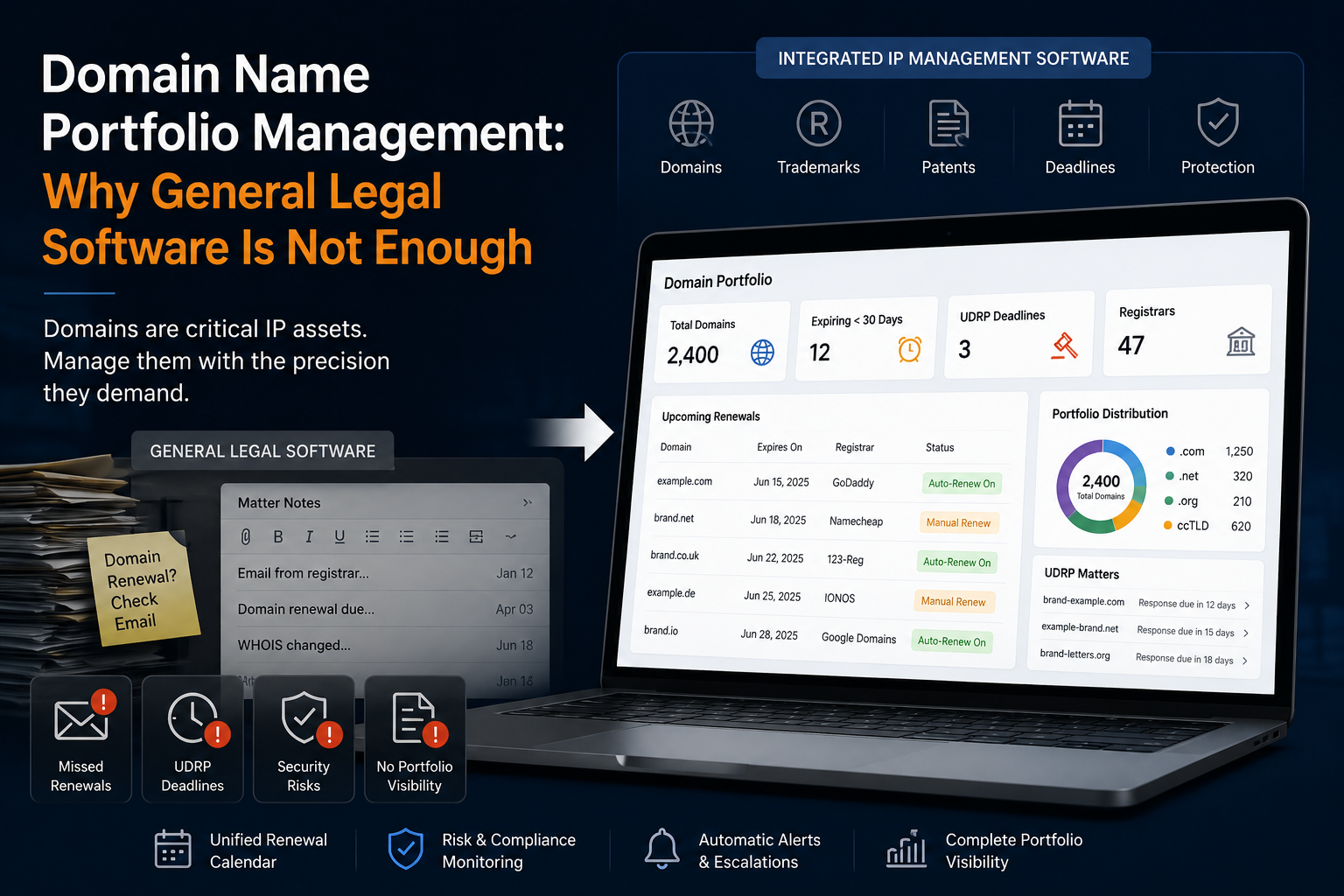
The Domain Blindspot in General Legal Software
When a Fortune 500 company has 2,400 domain name registrations across 47 TLDs, its general-purpose matter management system typically handles them as a single "matter" with a notes field. Every renewal, transfer, registrar change, or UDRP proceeding is a comment in that notes field — or worse, a separate email thread.
This is a brand protection timebomb.
What Domain Portfolio Management Actually Requires
Domains are not like patents or trademarks. They have:
- Annual (or multi-year) renewal cycles across dozens of registrars with different interfaces, payment methods, and auto-renew behaviours.
- Registrar consolidation risk. If a registrar goes out of business or is acquired, the entire block of domains needs emergency transfer.
- UDRP and URS exposure. A cybersquatter can file a UDRP complaint on any domain, and the respondent has strict 20-day response deadlines.
- DNS monitoring requirements. A domain that is allowed to expire and is re-registered by a bad actor can be weaponised for phishing attacks against the brand's customers.
Why General Matter Management Systems Fail Here
A general legal matter system tracks tasks and documents. It does not monitor WHOIS records for expiry date changes, alert when a domain enters the redemption grace period, track which domains are defensive registrations vs. actively used, or provide a consolidated renewal calendar across all registrars.
What Integrated IP Software Provides
Purpose-built IP management software treats each domain as a first-class asset alongside trademarks and patents. Expiry dates sync from registrar APIs where available, or are manually maintained with automatic reminder cascades. UDRP deadlines are tracked with the same rigor as patent response deadlines.
The result is a portfolio where every asset — regardless of type — is visible, monitored, and protected.